


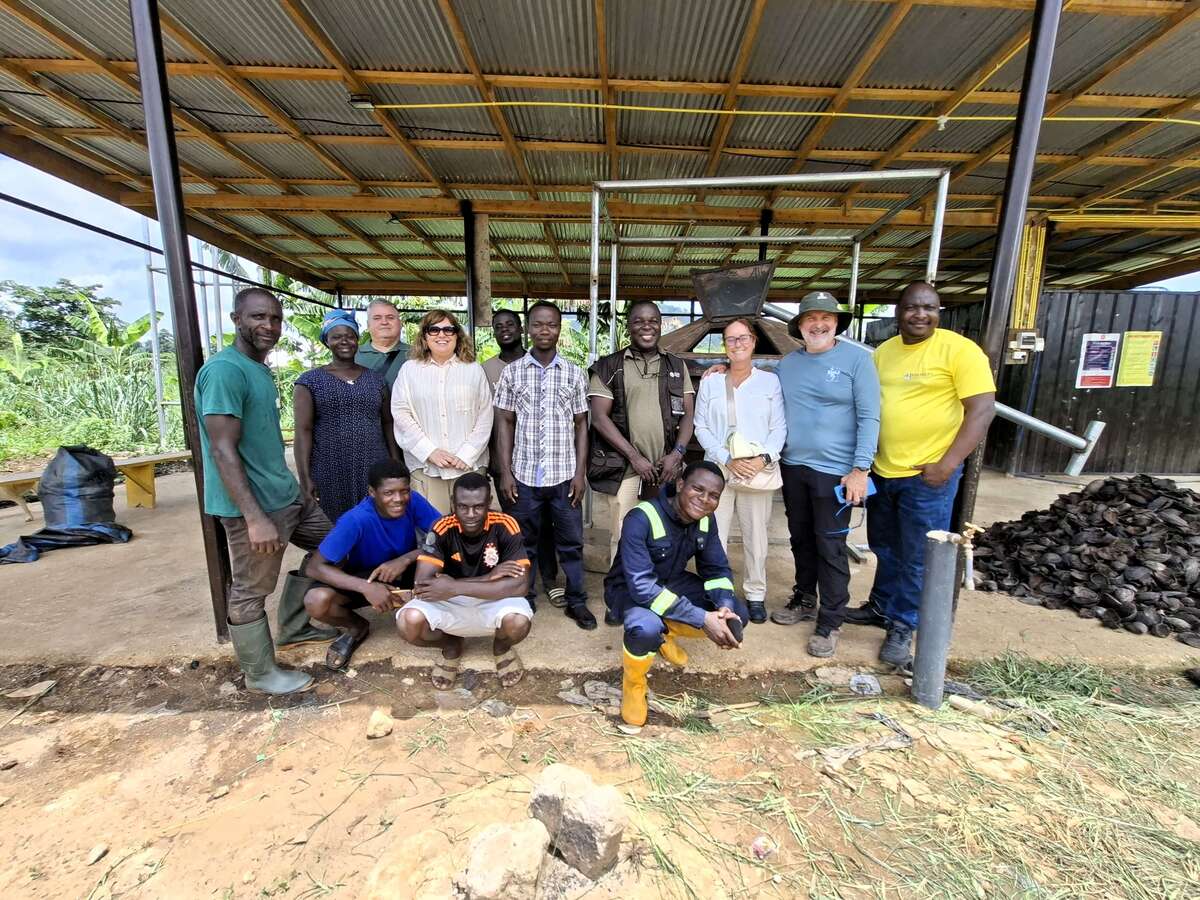
Technical staff from the Canary Islands Institute of Technology (ITC) and the Gran Canaria Island Council in Spain carried out a technical visit to Ghana between 27 and 30 April to advance the activities 1.1 and 2.2 of the project, which cover food contaminant monitoring and circular economy practices in agriculture.
During the visit, the delegation held working meetings with scientists from the Soil Research Institute (SRI), ALSEMAC’s local partner, to fine-tune the design of the food contaminant monitoring programme that will be rolled out in Ghana. The plan is part of Specific Objective 1 and aims to identify food-borne hazards while also building a clearer nutritional picture of everyday foods. The programme will include sampling and laboratory analysis of plant and animal products, with particular attention to organic and inorganic contaminants such as pesticides, antibiotic residues, mycotoxins and heavy metals.
The team also visited cocoa farms in the Bibiani and Ashanti regions, where they saw first-hand different experiences linked to the use of agricultural by-products. In Bibiani, two farms are currently testing biochar made from cocoa pod husks, an example of the kind of circular solution ALSEMAC seeks to promote through the transformation of organic waste into high-value soil amendments. In Ashanti, the delegation learned about the SRI’s experimental fertilisation trials in cocoa crops, which assess both yield and plant health under different treatments.
The visit ended at the Soil Research Institute facilities in Kwadaso, Kumasi, where the team saw further work on maize-cob biochar, experimental plots for soil amendment studies and biomass balance projects aimed at the sustainable use of agricultural residues. ALSEMAC also presented the future site of its experimental and training platform for biochar production using Kontiki-type kilns. The facility will support Specific Objective 2, which focuses on making food production more circular and more respectful of soils.


